The Manufactured Man
On Citizen Kane at eighty-five years old, and the sad, lonely architecture of a life lived for the audience.

Kane’s Wound, Our World
While a young boy basks in the snow with his sled, his mother learns that she’s come into a huge sum of life-changing money and immediately signs the boy’s life over to a banker so that he can receive a better life and education from the poor boarding school he’s been raised in. The camera view peeks from the inside of a window frame, like a young voyeur eavesdropping in on an adult moment they shouldn’t be allowed to hear or see.
That is the moment 8-year-old Charles Foster Kane unconsciously learns that love is less a connection and more a commodity that can be bought, sold, or traded in— a form of currency mistaken for affection itself.
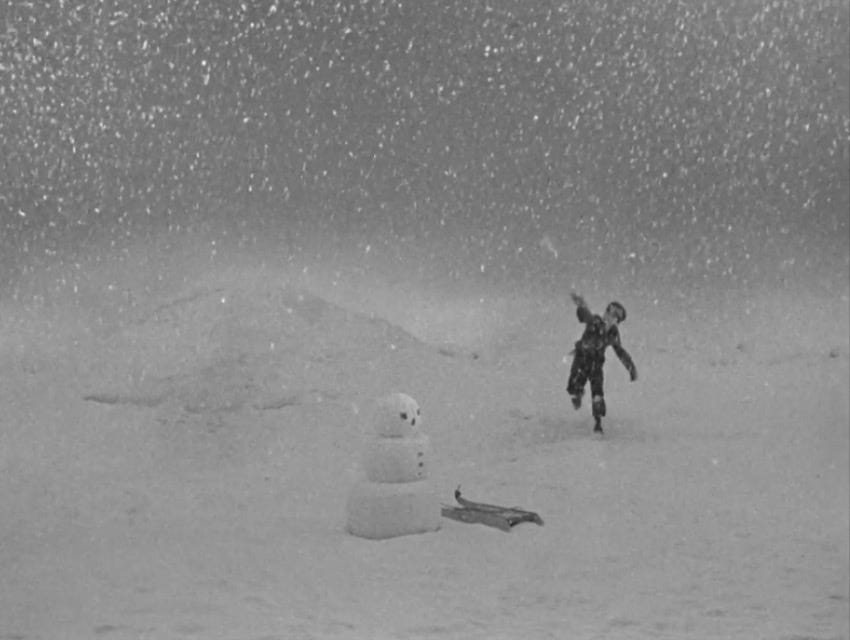
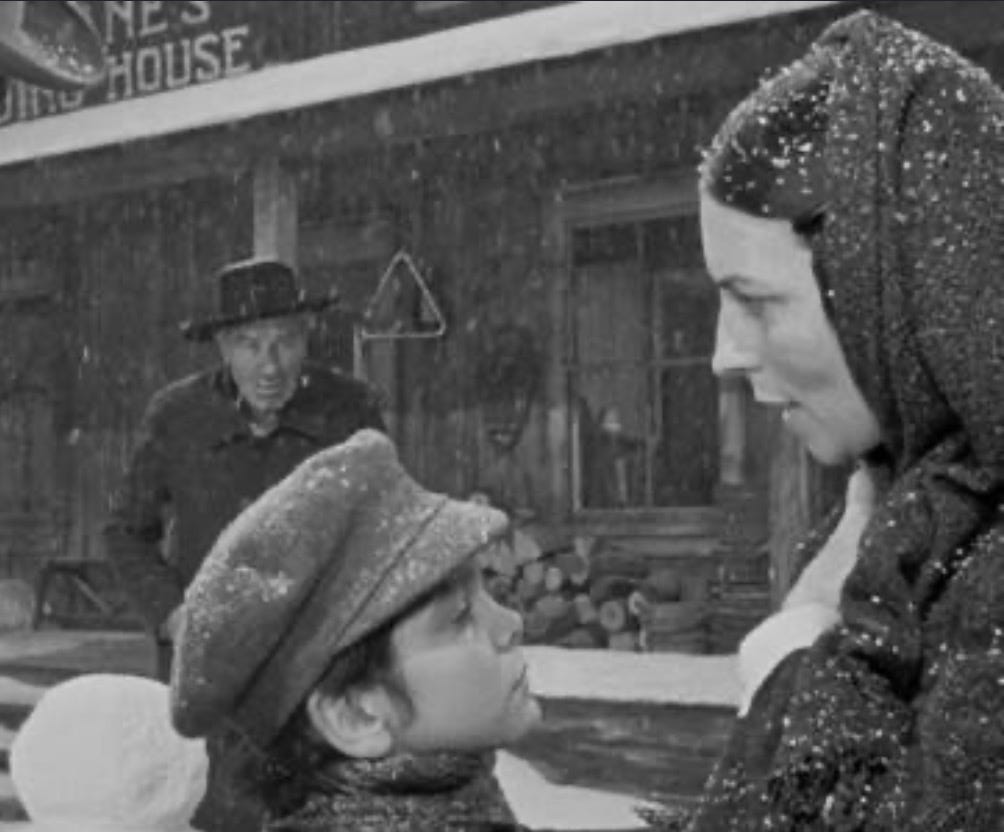
I watched this movie for the first time in theaters yesterday at Charlotte’s Independent Picture House —celebrating the film’s 85th anniversary in partnership with The Mint Museum. I was expecting to luxuriate in some old-world storytelling and fine acting, but was surprised to find myself bearing witness to the devastating, spiraling effects of the lead character’s deep psychological wound—watching it leave a trail of emotional and relational destruction in its wake.
How a man who has the money to buy anything and everything ends up getting slowly swallowed whole by his own emptiness. The more his power, wealth and outside influence expand, the tighter his physical body constricts.
The Effects of Kane’s Narcissistic Injury
Welles himself was a young, spry twenty-five years old when he made Citizen Kane. He absolutely shows his bona fides as an actor and director, with generational talent that belies his age. One of the most versatile actors I’ve ever seen on screen, he understood more than most his age what most actors playing rich men often get wrong.
Crucially and most entertainingly, watch how his body physically transforms across the film. The young Kane bounds across rooms with swagger and buoyancy befitting a young, handsome, rich man. But by the film’s third act, senior citizen Kane at Xanadu can barely turn his head. His gait is stiff and wooden. The voice flattens. The eyes stop tracking other people and start staring out as if into a void.
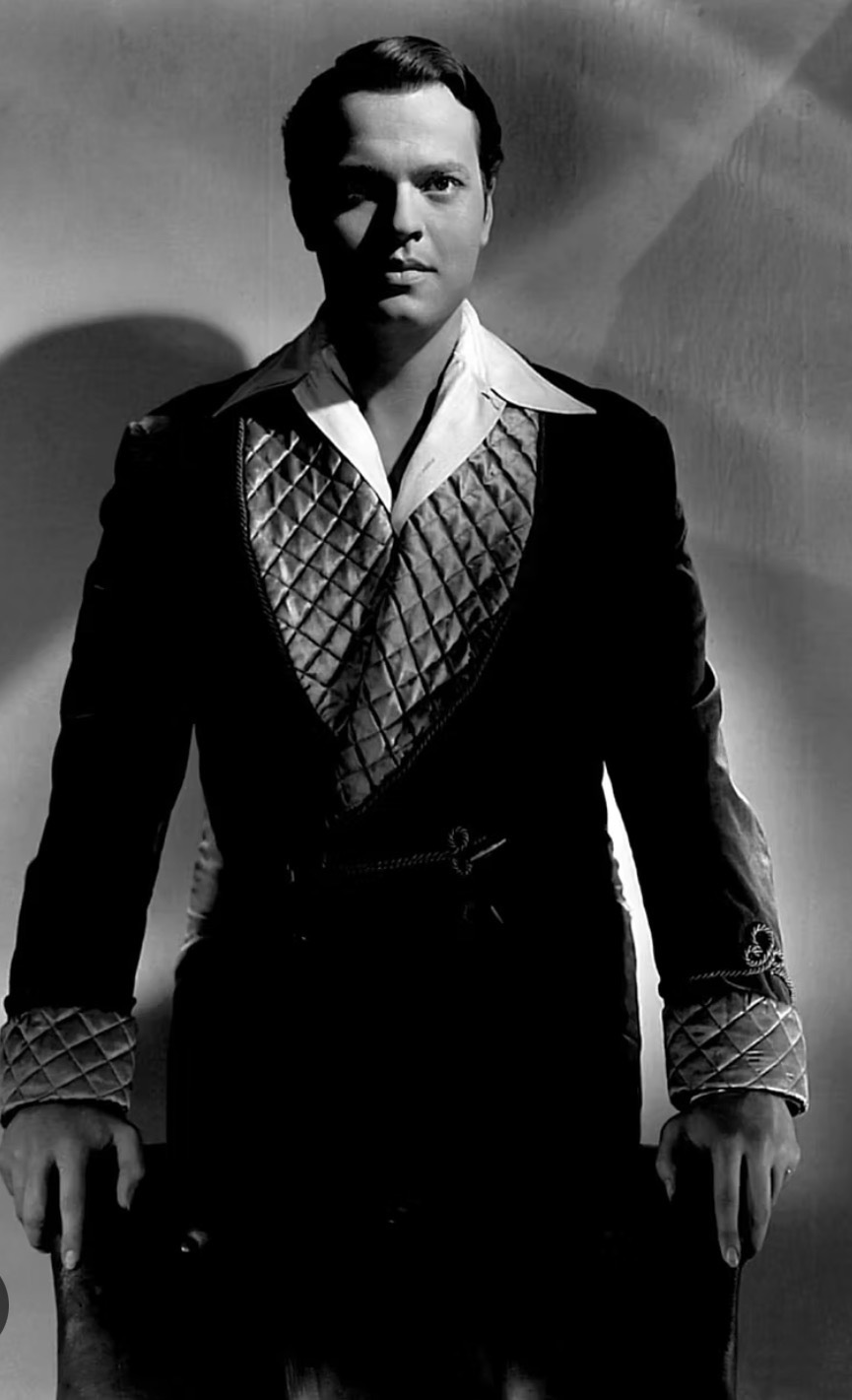
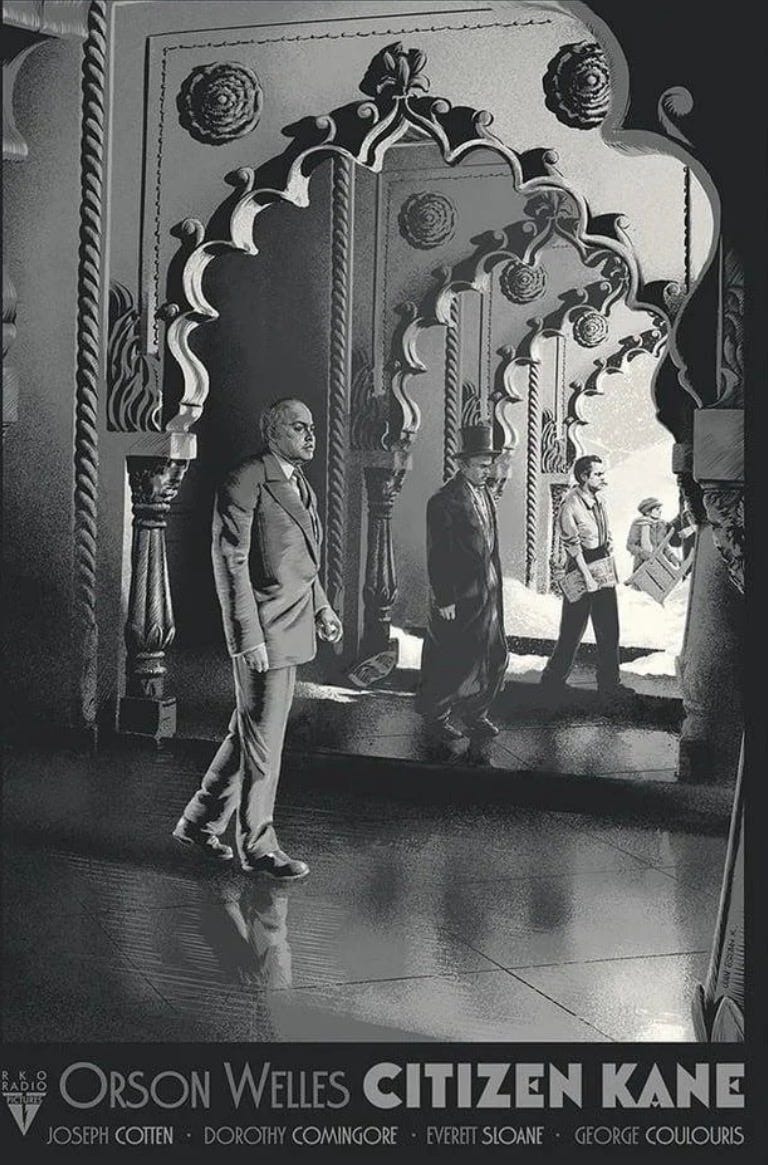
That somatic shrinking is the body’s version of what behavioral scientists call narcissistic injury: a rupture in the self’s ability to feel real through others, so it stops trying, contracts, goes private — until other humans become scenery. Joe Dispenza talks about how the body always remembers what the mind tries hard to forget. The body always keeps the score, whether we like to admit it or not. The result is a devastating physiological and mental fracture. You’re watching a slow burn, full-blown physical deterioration induced by a single but powerful early childhood trauma witnessed by the audience within the first ten minutes of the opening act—an entire nervous system organizing itself around a single early betrayal.
Most actors playing tyrants play the tyranny—performing the result rather than the interior. Externalized dominance. Affect as costume.
By contrast, Welles films the emotional center every time. As the audience, we witness the eight-year-old Kane in contented, unadulterated childhood bliss outside the window while his mother signs him away like a piece of property and lets the future adult tyranny become the messy, maligned scar tissue formed over the resulting traumatic experience of being abandoned at a moment’s notice.
Welles provides a masterclass in artistic and emotional complexity because he plays the cost of the defense, not the defense itself.
Kane’s Wound Has Gone Viral In Today’s Age of the Influencer
Kane wants love, but only on terms he can dictate. Crushingly, he knows no other way of obtaining it.
He buys his second wife an opera career (against her own wishes) so that the public will love her on his command. He runs his newspaper at a severe financial loss in order to stick it to and attack the private banking trusts that bought him, then becomes the trust himself. He builds a palace in Florida and fills it with boxed statues he never uncrates— the home becoming little more than a gilded mausoleum. An episode of Hoarders for the 1%.
Here is when we move beyond a niche character study and into the twisted operating logic of 2026.



The founder who buys a platform in order to be loved on it (Elon Musk, anyone?). The influencer who measures intimacy in engagement. The billionaire who acquires a newspaper not to inform but to be seen informing. Multiple, smaller but no less emotionally hollowed Xanadus are being built right now through social media feeds, follower counts and acquisitions. An ever dizzying array of public figures performing affection that they simultaneously cannot privately receive.
Attachment researchers have a name for this wound: disorganized attachment converted into compensatory grandiosity. The child experiences love as a transaction at a crucial moment in their life, and the adult spends their life trying to be the buyer instead of the bought.
Welles first diagnosed the disease, and now we’re all living through the epidemic.
Reverse White Double Consciousness
The world Citizen Kane shows is entirely White and that’s not by accident. Kane's empire is built in an America where Black labor, Black readership and Black political life were structurally invisible to the kind of newspaper baron he represents. The film inherits that frame and never questions it.
This is not a knock on Welles; it’s just a fact about what 1941’s rich, upper-crust societal camera could and couldn’t see, which actually sharpens the analysis.
The pathology Kane embodies did not stay in his demographic. It has become one of the dominant emotional templates of American success today in 2026, and you can now watch it metastasize across any kind of person with a phone in their hands, Black or White. The wound has spread. You don’t need to be a newspaper tycoon anymore. You simply need an iPhone.
W.E.B. DuBois wrote about double consciousness more than a century ago. The Black self watching itself being watched. What I see in Kane now is a sort of white version of that haunting. A man so obsessed with being seen loving and being loved that he forgets how to do either, genuinely and completely loses himself in the process.
Rosebud is a Metaphor for Lost Affection and a Cry for Lost Motherly Love
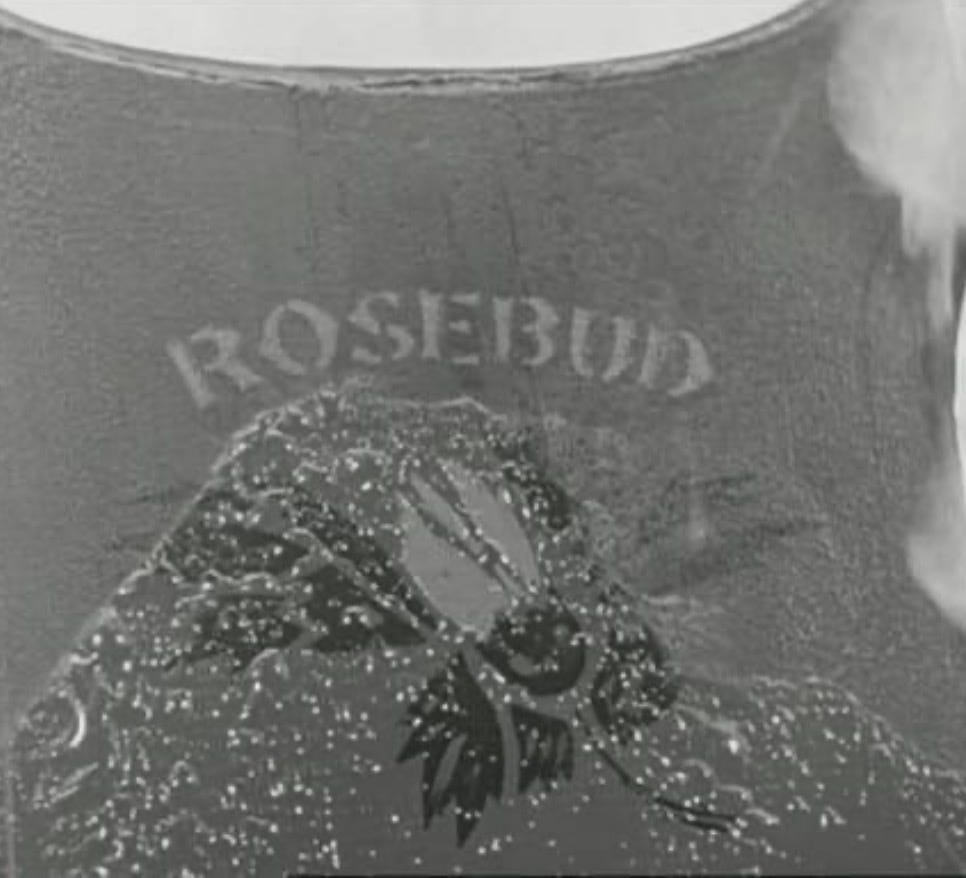
Some readings treat Rosebud as a meaningless artifact. Some bygone, insignificant material toy that Kane lost, in a sea of other toys, but that would be a woefully insignificant interpretation.
Rosebud represents the last genuine moment of psychological safety and true love before his entire worldview shifts dramatically. This changes everything. After this moment, he begins to understand love solely as a transaction. Everything he built and pursued afterward was an attempt to compensate for the loss of authentic motherly affection. However, none of it worked because what he lost was not a tangible object. It was the version of himself that existed before he learned the cost of love.
That is the wound Welles diagnosed. And the question is not whether you have it.
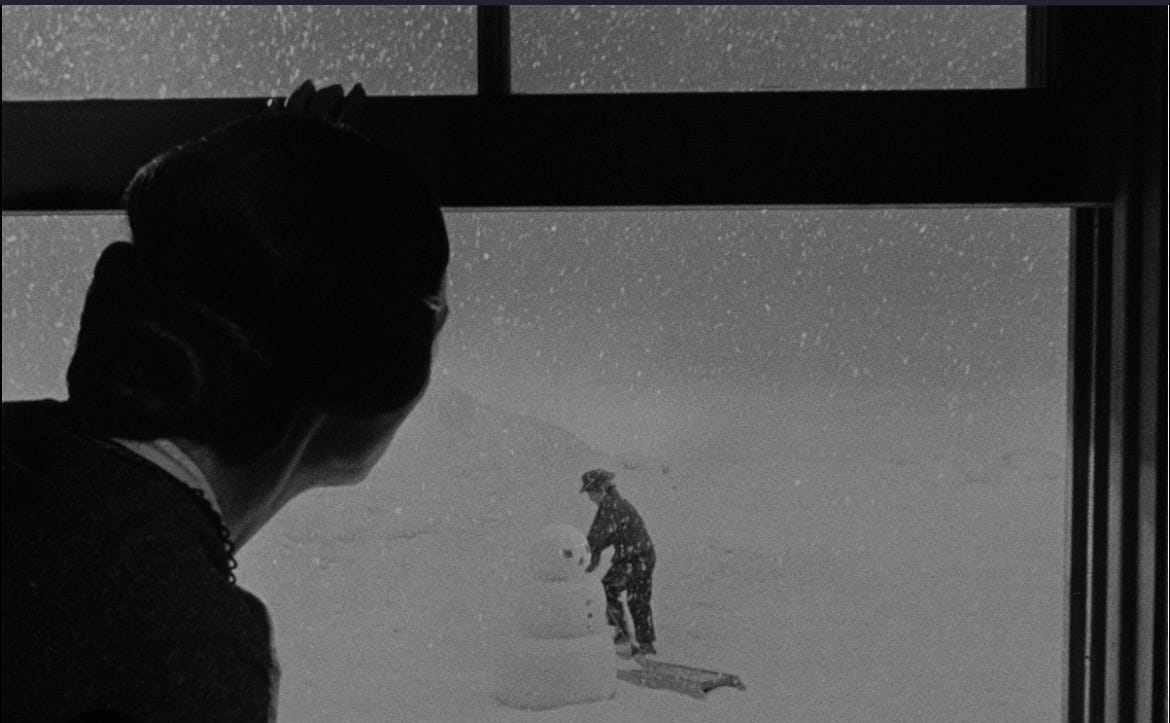
The real question is whether we continue building Xanadus — online, offline, in titles and follower counts — or whether we finally put down the sled, walk back out into the snow, and remember what it felt like to belong somewhere without having earned it. That sense of unconditional place is stolen from most of us the moment we learn to dress ourselves, thrust into a world that mistakes transaction for connection and ambition for meaning. None of it reciprocates. None of it holds us. And the longer we mistake acquisition for love, the deeper the original wound goes untended — calcifying beneath every achievement, every curated image, every relationship built on what we offer rather than who we are. Kane’s tragedy isn’t that he died alone. It’s that he never turned back to heal the thing that hurt him, and suffered the ultimate consequence for it.
We still can. And we don’t need loads of money to do it. We merely need to find the inner courage and open faith to surrender to the quiet, unglamorous descent into our own interior. To meet the parts of ourselves we abandoned in order to survive, and to love them back into the whole. There is no follower count for that work. No applause. Just the slow, sacred labor of becoming someone who no longer needs to be bought.